Showing posts with label Japan. Show all posts

Saturday, July 27, 2013

Why our Philippine sovereign claim to Spratleys totally different from the Senkaku/Diaoyu isles dispute of Japan/China

I think the territorial disputes of the Philippines and Japan versus China are totally different cases, and shouldn’t be lumped together as the same or even similar?

Japan Prme Minister Abe meeting Philippine President Aquino in Manila, image below sourced from interaksyon.com


I think it is in the best national interest of the Philippines to pursue our sovereignty claims on their own merits and not to mix them altogether with the controversial Senkaku/Diaoyu isles dispute between Japan and China which has totally different historical and political dynamics?

I believe our Philippine territorial claim is stronger and has better chances than Japan's historically controversial claim, and that we in the Philippines can still have much better economic as well diplomatic ties with our traditional friend China than Japan can have with its traditional historic foe China too. 

Why?

First, I believe the territorial claims of both China and the Philippines---also those of Taiwan, Brunei, Malaysia and Vietnam---are only recent or modern-day claims in the 20th century only?

In China’s case, their Nine-Dash Line claim was---I think---formulated a century ago by then Republic of China (ROC) regime? We in the Philippines have made our territorial claims to the inhabited isles of the Spratleys first with Admiral Tomas Cloma’s personal and private claims of "Freedomland" or what is now called Pag-Asa which President Marcos got from Cloma for the Philippines?

China's Nine-Dash Line claim was done in the early 20th century, the 1898 Treaty of Paris with Spain selling the Philippines to the United States, and our 1935 Philippine Constitution doesn't indicate the Spratleys, so my point is, these uninhabited isles in Spratleys are modern-era claims by the different claimants of Asia and considered by almost all as “disputed territories”?

Admiral Cloma commemorative postage stamp, imaged sourced from philippinephilatelist.net


Image below is Admiral Cloma's flag for his self-proclaimed "Free Territory of Freedomland", sourced from en.wikipedia.com


Second, in the case of Japan’s claim on Senkaku isles, those were deemed historically part of China during the Qing Dynasty which Japanese military war and colonization annexed in the late 19th century along with its takeover of Taiwan in 1895, so historically in the perspective of the Chinese nation, those isles are the Diaoyu isles which they believe rightfully belong to China. 

The issue of the Diaoyu/Senkaku territorial dispute is sensitive due to the history of Japanese military aggression in China which climaxed during World War II, and therefore it is prudent, wise and better for us in the Philippines to not lump ourselves and our own Spratleys sovereignty claims together with the age-old wartime grudges and conflicts between Japan and China, especially that Japan is now led by a hawkish political leader?

New York Times columnist and 2-time Pulitzer Prize winner Nicholas D. Kristof wrote on September 19, 2012: "I’ve had a longstanding interest in the Diaoyu/Senkaku islands, the subject of a dangerous territorial dispute  between Japan and China. The United States claims to be neutral but in effect is siding with Japan, and we could be drawn in if a war ever arose. Let me clear that I deplore the violence in the recent anti-Japan protests in China:  the violence is reprehensible and makes China look like an irrational bully. China’s government should rein in this volatile nationalism rather than feed it. This is a dispute that both sides should refer to the International Court of Justice, rather than allow to boil over in the streets. That said, when I look at the underlying question of who has the best claim, I’m sympathetic to China’s position. I don’t think it is 100 percent clear, partly because China seemed to acquiesce to Japanese sovereignty between 1945 and 1970, but on balance I find the evidence for Chinese sovereignty quite compelling. The most interesting evidence is emerging from old Japanese government documents and suggests that Japan in effect stole the islands from China in 1895 as booty of war. This article by Han-Yi Shaw, a scholar from Taiwan, explores those documents. I invite any Japanese scholars to make the contrary legal case." Below is a link to his blog on this issue
http://kristof.blogs.nytimes.com/2012/09/19/the-inconvenient-truth-behind-the-diaoyusenkaku-islands/?_r=0
We have had over 1,000 years of friendly relations between the Philippines and China, therefore any territorial disputes can be a disagreement between old friends? On the other hand, China---similar to the Korean nation---has age-old and bitter war memories with Japan which therefore complicates their territorial disputes on a totally different level and dimension, so their territorial dispute is a disagreement between former enemies?

Isn't it strategically prudent, pragmatic and wiser for the benefit of our immediate and long-term national interests in the Philippines to not be lumped together or in the same light as Japan, in the consciousness of China's leaders and people?

Image below of the disputed Diaoyu or Senkaku isles between China and Japan, sourced from cananewslibre.com


I am posting these ideas here, in response to the news today, which I am sharing below:


Philippines, Japan leaders hold talks over China disputes

July 27, 2013 11:10am

Sunday, July 7, 2013

Okinawa independence from Japan, a legitimate cause?

Is the clamor for reclaiming the independence of Okinawa from Japan a legitimate cause? Okinawa used to be an independent kingdom in Asia known as the Kingdom of Ryukyus, until it was conquered and colonized by Japan. Is their situation similar to that of East Timor or even Korea (which Japan colonized at the same time as the Rukyus or Okinawa)?

Maybe it's time for leaders of Japan to treat Okinawa and its people better, give them more economic and other support, since Okinawa is now still the poorest area in Japan?

Perhaps Japan should consider to quickly move out the American military bases from Okinawa and into other isles of Japan, out of respect for the wishes of the Okinawa people?

I pondered on these and other questions after reading this article below:


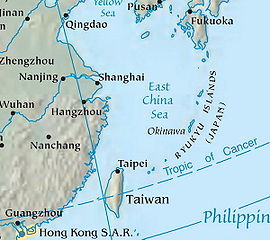
The map of Okinawa above, sourced from en.wikipedia.org


The image above of Okinawa, sourced from deshow.net


New York Times article: In Okinawa, Talk of Break From Japan Turns Serious
Ko Sasaki for The New York Times
 
Chosuke Yara, the head of the Ryukyu Independence Party, last month. “Independence is an idea whose time has come,” he said.

By Martin Fackler

Published July 5, 2013

NAHA, Japan — In a windowless room in a corner of a bustling market where stalls displayed severed pigs’ heads and bolts of kimono silk, Okinawans gathered to learn about a political idea that until recently few had dared to take seriously: declaring their island chain’s political independence from Japan.

About two dozen people of all ages listened as speakers challenged the official view of Okinawa as inherently part of homogeneous Japan, arguing instead that Okinawans are a different ethnic group whose once-independent tropical islands were forcibly seized by Japan in 1879. Then, to lighten the mood, the organizers showed “Sayonara, Japan!”, a comedy about a fictional Okinawan island that becomes its own little republic.

“Until now, you were mocked if you spoke of independence,” said one speaker, Kobun Higa, 71, a retired journalist whose book on the history of the tiny independence movement has become a hot seller online. “But independence may be the only real way to free ourselves from the American bases.”

Mr. Higa and other advocates admit that few islanders would actually seek independence for Okinawa, the southernmost Japanese island chain, which is home to 1.4 million residents and more than half of the 50,000 American troops and sailors based in Japan. But discontent with the heavy American presence and a growing perception that the central government is ignoring Okinawans’ pleas to reduce it have made an increasing number of islanders willing to at least flirt publicly with the idea of breaking apart in a way that local politicians and scholars say they have not seen in decades.

In May, a newly formed group led by Okinawan university professors held a symposium on independence that drew 250 people. A tiny political party that advocates separation from Japan through peaceful means has been revived after decades of dormancy, though its candidates have fared poorly in recent elections.

And on his blog, a member of Parliament from Okinawa recently went so far as to post an entry titled “Okinawa, It’s Finally Time for Independence From Yamato,” using the Okinawan word for the rest of Japan.

“Before, independence was just something we philosophized about over drinks,” said Masahide Ota, a former governor of Okinawa, who is not a member of the movement.

“Now, it is being taken much more seriously.”

The independence movement remains nascent, with a few hundred active adherents at most. But Mr. Ota and others say it still has the potential to complicate Japan’s unfolding contest with China for influence in the region.

That struggle expanded recently to include what appears to be a semiofficial campaign in China to question Japanese rule of Okinawa. Some analysts see the campaign as a ploy to strengthen China’s hand in a dispute over a smaller group of islands that has captured international headlines in recent months. Some Chinese scholars have called for exploiting the independence movement to say there are splits even in Japan over the legitimate ownership of islands annexed during Japan’s imperial expansion in the late 19th century, as Okinawa and the smaller island group were.

Okinawa has long looked and felt different from the rest of Japan, with the islands’ tropical climate, vibrant musical culture and lower average incomes setting it apart. Strategically situated in the center of East Asia, the islands, once known as the Kingdom of the Ryukyus, have had a tortured history with Japan since the takeover, including the forced suicides of Okinawan civilians by Japanese troops during World War II and the imposition of American bases after the war.

For years, Okinawans directed much of their ire over the bases at the United States. But that changed four years ago when the Japanese prime minister at the time, Yukio Hatoyama, reneged on campaign pledges to move the bustling Marine air base at Futenma off Okinawa, rather than to a less populated site on the island as previous governments had approved. After that, many Okinawans shifted much of their anger toward the rest of Japan, which wants the United States military presence to offset China’s growing power, but is unwilling to shoulder more of the burden of bases for fear of crime, noise and accidents.

Local leaders and scholars say the last time Okinawans spoke so openly of independence was during a period of sometimes violent unrest against American control before the United States ended its postwar occupation of the islands in 1972.

“There is a growing feeling that Okinawans just exchanged one colonial master in Washington for another one in Tokyo,” said Shinako Oyakawa, 32, a doctoral student at the University of the Ryukyus and a co-founder of Okinawan Studies 107, a group promoting research into Ryukyuan ethnic identity.

Such discontent has helped nurture groups like hers, which seek to promote the idea that the islanders form a distinct ethnic group. It has also led to the creation of places like Ryukyu Hall, a privately run school that opened last year and offers classes on Okinawan language and culture.

On a recent weekend, about 30 people gathered at the school, a small, sparsely furnished two-story building, to hear accounts in the Ryukyuan language by survivors of the American invasion of Okinawa in 1945.

“Regaining our identity is the first step toward regaining independence,” said Midori Teruya, 41, a co-founder of the school in Ginowan, the site of the Futenma air base.

The talk of independence has grown enough that it is being heard in Tokyo, where some conservative newspapers have begun calling the Okinawan independence activists “pawns” of China.

Whether or not the activists are pawns, there is certainly some discussion in China about using the independence movement. Recently, an editorial in The Global Times, a state-run Chinese newspaper, said China could pressure Japan by “fostering forces in Okinawa that seek the restoration of the independence of the Ryukyu chain.”

Few believe China is about to pursue ownership of Okinawa. But Japanese analysts see the informal campaign as the latest gambit in China’s attempts to take over the smaller group of islands, known as the Senkaku in Japan and Diaoyu in China, by essentially warning that China could expand its claims beyond those islands if Japan ignores its arguments.

“It will create problems for us if the Chinese government tries to use this issue,” said Masaki Tomochi, a professor at Okinawa International University who helped organize the symposium on independence in May.
Mr. Tomochi and other activists said that in the remote event that Okinawa became independent, they felt little fear of a Chinese takeover because the Ryukyus had held friendly ties with China for centuries before the Japanese takeover.

Mr. Tomochi’s group is planning a second symposium to present research on how Pacific island nations like Palau could serve as a model for a future Ryukyu republic. The idea is to try to overcome what he sees as the main challenge his movement faces: winning over Okinawans who seem content with their Japanese-style living standards.

“People are talking independence now, but how realistic is it?” asked Yoshinao Hiyane, 22, an economics major at Okinawa International University. “My generation has grown up Japanese.”

At the movie screening in the market, independence supporters tried to bolster the notion that their idea is more than a fantasy by handing out color-copied “currency” of a Ryukyu republic. They stood before a blue banner with three stars that the organizer, Chosuke Yara, called its flag.

“Recently, the interests of the Japanese people and the Ryukyu people have clearly diverged,” said Mr. Yara, 61, the head of the tiny Ryukyu Independence Party. “Independence is an idea whose time has come.”

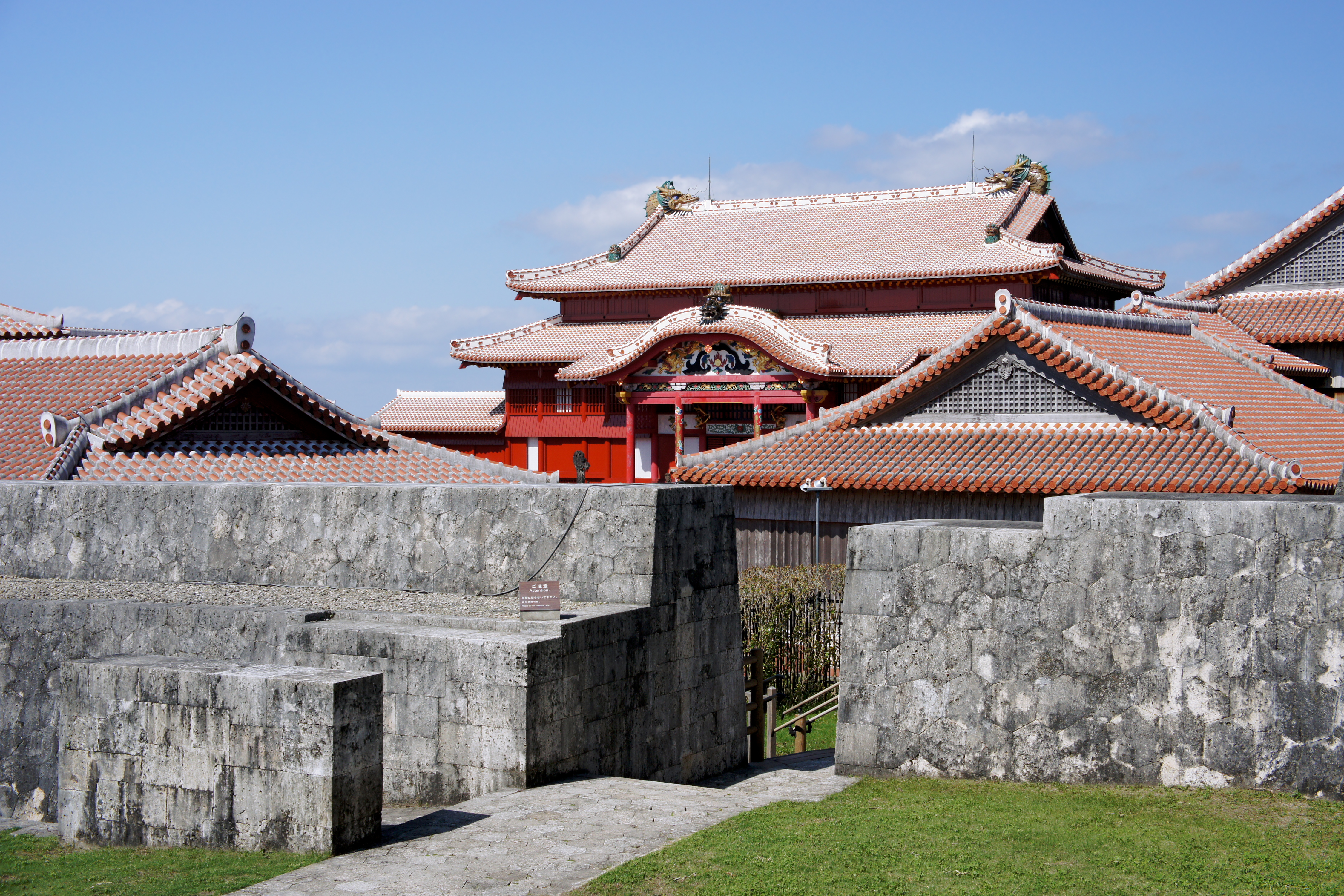
Naha Shuri Castle in Okinawa, image below sourced from en.wkipedia.org

File:Naha Shuri Castle50s3s4500.jpg

Sunday, January 27, 2013

Bloomberg News columnist William Pesek has added to the increasing skepticism about the policies of Prime Minister Shinzo Abe to revive the stagnant and ailing Japan economy.

When shall real substantial and bold structural reforms be pushed, so that Asia's second biggest economy can be saved, in order for the future and long-term stability of Asia and the world to become better?


(This image below sourced  from fedupusa.org)


(Image of Prime Minister Shinzo Abe below sourced from guardian.co.uk)


(Image below sourced from cnbc.com)


(Image below sourced from politicallyillustrated.com)


Here is the thought-provoking analysis of William Pesek of Bloomberg News:

Paul Krugman’s Worn-Out Ideas for Japan


Let’s get over this honeymoon for Japan’s new prime minister, Shinzo Abe, and do a reality check on his idea that the economy is about to boom now that voters have returned him to office.

At first, I wondered if I had lost my bearings. Was I just hopelessly cynical after 11 years in Tokyo, watching a numbing parade of inept leaders come and go as the Liberal Democratic Party pledged change that never arrived? The steps Abe has taken in the first few weeks of his latest premiership restored my faith in the merits of skepticism.

William Pesek


William Pesek is based in Tokyo and writes on economics, markets and politics throughout the Asia-Pacific region.

Abe’s big idea, the one that has investors feeling the most bullish on Japan since 2009, is fiscal pump-priming and getting the Bank of Japan to do more to stimulate growth. About 21 percent of respondents to a Bloomberg poll now see Japan as offering the best opportunities over the next year. The same poll showed 54 percent are more optimistic than pessimistic about what some are calling Abenomics.

Those numbers are hard to ignore on two scores. First, I only hope that those in charge of managing my retirement accounts aren’t among the Japan-bulls-come-lately. The second is how short memories can be. Abe, remember, failed miserably in his first term as prime minister in 2006-2007.

Walker Economy

Abe’s LDP spent almost 20 years building bridges, roads, tunnels, dams and airports to nowhere and forcing the central bank to add liquidity to the banking system to end deflation. And what did those unimaginative policies leave Japan’s 126 million people with? The easy answer is the world’s highest ratio of debt to gross domestic product. The harder one: Japan has become a nation that can’t proceed without the economic equivalent of a walker.

That image takes on a deeper meaning when you consider Japan’s awful demographics and the dearth of ideas to cope with them. Take Finance Minister Taro Aso, who this week said elderly people should “hurry up and die” to relieve pressure on the government to pay for health care.

So is it really plausible that with just one more try of the same old remedies, Abe’s team will get the economy to walk on its own and then sprint ahead? Seriously?

No economist could formulate a credible list of every shot of stimulus and every dose of monetary steroids that officials have pumped into the economy since the early 1990s. There have been too many overlapping treatments to document. None of them, not a single one, achieved what investors are betting Abe will do this time: make a Japanese recovery self-sustaining.

Fooling Investors

Deflation won’t end until Japanese consumers believe it will. Companies won’t hire until they think households will boost spending. Banks won’t lend until they assume loans won’t go bad. Wages won’t rise, supporting the expectations of these three pillars of the economy, until there is genuine confidence that 2013 or 2014 will be better than 2012.

This gambit may fool some investors, and it even got a plug from Nobel-winning economist Paul Krugman. It is true that Japan probably will get a quick GDP jolt. The yen is down and stocks are up. Japanese have seen this movie before, though, and suffered through sequel after sequel.

Abe isn’t offering anything new. Aside from a weaker yen, does he have a plan to make Japan more competitive to take on China or halt Sony Corp.’s slide toward irrelevance? How about ideas to make the labor force more flexible and international, starting with a new immigration policy? Or a strategy that inspires young Japanese to start new companies or families? What about freer trade? Increasing women’s role in politics and business? Even an energy plan that champions something other than the nuclear reactors Japanese fear amid earthquake risks? ]

None of the above. What Abe’s party fails to grasp is that Japan’s challenge is structural, not financial.

Surely that’s the message BOJ Governor Masaaki Shirakawa was aiming for this week. Abe talked about browbeating the central bank into a 2 percent inflation target. Shirakawa’s response? Yeah, maybe in a year. By then, Abe will have replaced Shirakawa, whose term expires in April, with a more agreeable official. But the BOJ’s smackdown is a reminder that monetary policy only goes so far when an economy is hobbled by dysfunction.

The LDP’s policies are like a religion with a fixed set of beliefs that have little utility in today’s world. The party’s dogma was fine before 1964, the year the Tokyo Olympics wowed a world that thought Japan couldn’t rise so quickly from the wreckage of World War II. The policy obsolescence became obvious once the bubble economy of the 1980s crashed.

Things are changing all around Japan. Yet officials in Tokyo refuse to embrace the world of 2013, assuming that the canon that delivered Japan the highest per-capita incomes in Asia is still viable. This faith that Japan is just one huge spending package away from bliss is becoming more detrimental with each passing year and credit downgrade. Abenomics really is more religion than reality.

Wednesday, January 16, 2013

Many international experts like Citigroup, Inc. of U.S.A. are increasingly skeptical and wary of the huge, populist and seemingly unsustainable, unwise stimulus program of Prime Minister Shinzo Abe for the ailing Japan economy. What is worrisome is that even Japanese experts like Takeshi Fujimaki, a former adviser to billionaire investor George Soros, predicts possible Japanese economic collapse as a result of this stimulus plan by Abe. Read the two news reports below on these dire forecasts. Let us hope for the best always, but be wary of, keenly aware of and prepare for the worst too!

Japan is still the world's third biggest economy, and its possible collapse or even nonstop stagnation has negative implications for all of us.

I believe there are other bitter pills and real reforms needed to revive the stagnating Japanese economy.


(This graphic image of Japan's economic meltdown, for the past three decades, sourced from fedupusa.org)


(This image below sourced from npr.org)


Here's a worrisome but realistic possible Japan scenario which we should all prepare for:

Abe’s Stimulus May Trigger Japan Default, Fujimaki Says


Prime Minister Shinzo Abe’s fiscal and monetary stimulus measures may trigger a collapse of Japan’s economy as early as this year, according to Takeshi Fujimaki, a former adviser to billionaire investor George Soros.

The yen has slumped 6 percent since elections last month returned power to the Liberal Democratic Party run by Abe, who’s demanded that the Bank of Japan (8301) undertake unlimited cash infusions to end deflation. The premier also unveiled 10.3 trillion yen ($116 billion) in extra spending last week, a step that will add to public debt that’s already more than double the size of the nation’s economy.

Enlarge image Fujimaki Japan Inc. President Takeshi Fujimaki

Fujimaki Japan Inc. President Takeshi Fujimaki

Fujimaki Japan Inc. President Takeshi Fujimaki
Fujimaki Japan Inc. President Takeshi Fujimaki. Fujimaki Japan Inc. via Bloomberg

“Large-scale spending is ridiculous given the amount of debt Japan has accumulated, while I think highly of Abe in regards to his intention to weaken the yen to support growth,” the president of Fujimaki Japan, an investment advising company in Tokyo, said in an interview on Jan. 11. “Abe’s policies would have worked some 10 years ago, but now they will only accelerate an economic collapse.”

Fujimaki said in an interview last June that Japan may default on its debt within five years and the yen could weaken to as much as 400-500 per dollar. He advised Japanese investors then to hold assets in foreign currencies such as the greenback, Swiss franc, U.K. pound and the Australian and Canadian dollars.

Borrowing in yen and investing in those currencies would have returned an annualized 32 percent as of yesterday, Bloomberg data show.

Nikkei Surge

The BOJ, scheduled to hold a policy meeting on Jan. 21-22, is poised to adopt the 2 percent inflation target advocated by Abe, doubling its existing goal of 1 percent, according to people familiar with BOJ officials’ discussions. Central bank Governor Masaaki Shirakawa said today the economy remains weak and the BOJ will pursue “powerful monetary easing.”

The yen’s drop and the government’s spending plan have helped drive the Nikkei 225 Stock Average of domestic shares up 12 percent since the election. A weaker yen makes Japanese-made products more competitive overseas and boosts the value of repatriated earnings.

Fujimaki joined the Tokyo office of Morgan Guarantee Trust Co., which merged into JPMorgan Chase & Co., in 1985 and later served as managing director and treasurer. He was hired by Soros Fund Management, once the world’s biggest hedge fund group, in 2000 and stayed less than a year, saying to Bloomberg News at the time that he failed to read the Japanese bond market correctly.

Yen Weakness

He has since lectured at Waseda University and Hitotsubashi University in Tokyo, and written more than 20 books, including a title due for release this month that translates to “A Vulnerable Japan: Objections to Baseless Optimism.”

Japan will issue an additional 8 trillion yen in bonds to finance the supplementary budget for the fiscal year ending March 31. The nation’s outstanding debt will swell to 245 percent of gross domestic product in 2013, the most in the world and twice the debt-to-GDP ratio for the U.S., according to estimates by the International Monetary Fund.

“The government won’t be able to get enough funding if the Japanese withdraw their bank deposits to buy foreign-currency assets in fear of further yen weakness,” said Fujimaki. “Japan’s fiscal collapse could happen even tomorrow.”

So far, the market for Japanese government bonds hasn’t signaled any concern about an impending collapse. Benchmark 10- year securities sank four basis points to 0.77 percent today, the least this year and the third-lowest level globally. Persistent deflation has supported domestic demand for JGBs, which are 91 percent owned in country.

Young People

The yen may weaken beyond 400 per dollar should the BOJ print money to absorb the nation’s debt, according to Fujimaki, describing a process known as monetization. The yen reached 89.67 per dollar yesterday, the weakest since June 2010, before rallying to 88.81 as of 5:20 p.m. in Tokyo today.

“I prefer to see a crash of Japan’s debt sooner than later because there’s no other way to revive Japan’s economy,” said Fujimaki. “The biggest merit for that is we won’t have to repay debt that we can never repay. Otherwise, young people will have to work like coach horses just to pay tax.”

***

Here is a report by journalist Mayumi Otsuma for Bloomberg news:

Abe Stimulus Risks Fizzling as Citigroup Sees Japan Job Gap

Japan’s 10.3 trillion yen ($117 billion) fiscal stimulus may add less than a quarter of the jobs the government predicts, casting doubt on Prime Minister Shinzo Abe engineering a sustained recovery.

Even with more central bank easing, most of the impact of Abe’s spending won’t spread far beyond public works projects, Citigroup Inc. (C) says. It estimates that 100,000 jobs will be created, compared with the government’s figure of 600,000. BNP Paribas SA (BNP) says 150,000.

Enlarge image Abe Stimulus Risks Fizzling as Citigroup Sees Japan Job Deficit

Abe Stimulus Risks Fizzling as Citigroup Sees Japan Job Deficit

Abe Stimulus Risks Fizzling as Citigroup Sees Japan Job Deficit
Akio Kon/Bloomberg
University students attend a job fair in Tokyo. While the unemployment rate fell to a four-year low of 4.1 percent in November, the rate among those aged 15-24 was 6.5 percent.
University students attend a job fair in Tokyo. While the unemployment rate fell to a four-year low of 4.1 percent in November, the rate among those aged 15-24 was 6.5 percent. Photographer: Akio Kon/Bloomberg

Enlarge image Japan's prime minister Shinzo Abe

Japan's prime minister Shinzo Abe

Japan's prime minister Shinzo Abe
Haruyoshi Yamaguchi/Bloomberg
Shinzo Abe, Japan's prime minister, announces the government's fiscal stimulus package in Tokyo on Jan. 11, 2013.
Shinzo Abe, Japan's prime minister, announces the government's fiscal stimulus package in Tokyo on Jan.
11, 2013. Photographer: Haruyoshi Yamaguchi/Bloomberg

Enlarge image Abe Stimulus Risks Fizzling as Citigroup Sees Japan Job Deficit

Abe Stimulus Risks Fizzling as Citigroup Sees Japan Job Deficit

Abe Stimulus Risks Fizzling as Citigroup Sees Japan Job Deficit
Tomohiro Ohsumi/Bloomberg
“So far, Abe has presented no concrete remedies to reverse the southbound trend of Japan’s job-market,” said Takuji Okubo, chief economist at Japan Macro Advisors. “We can’t help but be skeptical about the employment outlook.”
“So far, Abe has presented no concrete remedies to reverse the southbound trend of Japan’s job-market,” said Takuji Okubo, chief economist at Japan Macro Advisors. “We can’t help but be skeptical about the employment outlook.” Photographer: Tomohiro Ohsumi/Bloomberg

Abe is returning to a strategy that failed to end Japan’s stagnation over the last two decades even as the nation’s debt burden nearly tripled and extra stimulus spending totaled 80 trillion yen, according to BNP Paribas. Another failure may deepen voter apathy in a political system that has produced seven prime ministers in six years, while adding to the risk of a surge in bond yields.

“Fiscal stimulus is like morphine, because if you want to maintain the same level of effect you have to keep upping the dose,” said Azusa Kato, an economist at BNP Paribas in Tokyo. “Japan has failed to achieve a sustainable economic expansion, and the country’s record proves the strategy is wrong.”

The yen remained higher after a two-day rally as investors weigh the likelihood of more easing by the Bank of Japan (8301) next week. The currency was at 88.39 per dollar as of 2:49 p.m, up 1.4 percent from this week’s low on Jan. 14. The Nikkei 225 Stock Average (NKY) fell 0.4 percent after sliding yesterday by the most in eight months.

Bond Yields

Yields on the 10-year government bond touched 0.73 percent, the lowest since Dec. 17. The benchmark sovereign debt yield is the lowest in the world after Hong Kong and Switzerland.

JPMorgan Chase & Co. said today it sees Asian Development Bank President Haruhiko Kuroda as the main candidate to replace BOJ Governor Masaaki Shirakawa in April. Opposition leader Yoshimi Watanabe said in an interview yesterday that the next BOJ chief shouldn’t be a former central bank bureaucrat.

The Japanese government poured 33.8 trillion yen into stimulus measures in the 1990s, with 45 trillion yen added in the 2000s, according to estimates from BNP Paribas based on Finance Ministry data.

The average economic growth rate decelerated from 4.6 percent in the 1980s to 1.1 percent in the 1990s and 0.8 percent in the following decade, according to the brokerage.

More than a third of the spending package announced last week will go to disaster prevention and reconstruction after the March 2011 earthquake and tsunami. Extra spending will boost gross domestic product by about 2 percentage points, the government said.

Public Works

“There’ll be a positive effect on construction, but it won’t ripple out to other industries,” said Kiichi Murashima, Citigroup’s chief economist in Tokyo. “Companies are hesitant to expand payrolls until they’re sure demand will improve.’

Low unemployment may be masking challenges as older workers exit the labor force and wages stagnate in a nation struggling to emerge from a third recession in five years.

Panasonic Corp. (6752) eliminated more than 38,800 jobs in the year ended September and said last week it may close some businesses. Renesas Electronics Corp. said today it will cut more than 3,000 jobs.

‘‘At stake is whether wages will rise,” said Hiroaki Muto, senior economist at Sumitomo Mitsui Asset Management. “Abe will probably keep stimulating the economy through yen depreciation and fiscal spending, but that won’t induce a rebound in fundamentals that are crucial for jobs.”

Employment Downturn

The jobs-to-applicants ratio, a barometer of supply and demand, peaked in August and looks set for a cyclical downturn, according to Takuji Okubo, chief economist at Japan Macro Advisors and formerly of Goldman Sachs Group Inc. Wages have failed to rise for nine of the past 12 months.

“So far, Abe has presented no concrete remedies to reverse the southbound trend of Japan’s job-market,” Okubo said. “We can’t help but be skeptical about the employment outlook.”

Citigroup predicts that economic growth will rise to 2.2 percent in the fiscal year from April before falling to 0.3 percent the year after. Nomura Securities Co. says growth will be 1.8 percent in the year from April and at 0.3 percent in the following 12 months.

Japan’s government debt probably climbed to 237 percent of annual economic output last year, the most in the world, according to International Monetary Fund estimates.

While the unemployment rate fell to a four-year low of 4.1 percent in November, the rate among those aged 15-24 was 6.5 percent.

“Companies won’t increase hiring unless they’re convinced that the economy will keep improving for two, three or four years,” said Yoshiki Shinke, chief economist at the Daiichi Life Research Institute in Tokyo. “Growth expectations have weakened so much and it’s hard to change perceptions.”

Thursday, December 20, 2012

Congratulations to South Korea's first ever woman leader! She will show the world that women can be as gutsy and visionary as male politicos! Best wishes to the people of dynamic South Korea.

Can President Park Geun-hye help rein in or nudge reforms in hostile neighbor North Korea? Can she also persuade the political leaders and people of Japan to not embrace rightwing politics and come to terms with Japan's controversial colonial past like postwar Germany did, in order to help build a brighter future for East Asia? I personally have high hopes and great respect for South Korea's new leader.

(Photo below from reuters.com)


(Image below sourced from forums.allkpop.com)


Here's a news report from Reuters news agency:

Park Geun-hye wastes no time in addressing Japan and North Korea

First woman president takes tough line while promising to spread wealth more evenly
Friday, 21 December, 2012, 12:00 am


South Korea's president-elect, Park Geun-hye, used her first major speech yesterday to warn of the risks posed by a hostile North Korea and also fired a political shot across the bows of Japan's incoming prime minister, Shinzo Abe.
Speaking after a visit to the national cemetery, which included a poignant homage at the graves of her assassinated father and mother, the country's first woman leader pledged to spread wealth more evenly.

Park has said she will hold talks with North Korea and resume aid to the isolated and belligerent country, but only if it abandons its nuclear weapons programme. The impoverished North launched a rocket last week that critics said was a test for technology that could be used for a long-range missile that could one day carry a nuclear warhead.

"North Korea's long-range missile launch showed how grave the security reality is that we are faced with," Park said a day after her convincing election win.

She will take office in February and signalled she would continue outgoing Lee Myung-bak's tough line on territorial claims that Japan has on South Korea.

South Korea says Japan, which has similar disputes with China, has not come to terms with its harsh past rule of Korea. Japan says it has paid compensation for the slavery issue and has apologised.

"I will try to work for greater reconciliation, co-operation and peace in Northeast Asia based on a correct perception of history," she said, in an apparent reference to the conflict with Tokyo.

Park, 60, will replace fellow conservative Lee after his single five-year term ends. The slightly built and elegant Park grew up in Seoul's presidential palace during the 18-year rule of her father, Park Chung-hee, who took power in a military coup in 1961.

Park on Tuesday called for national "reconciliation" and pledged again to share wealth more evenly, but offered no clues about how she would implement policies. She is likely to face protests from South Korea's vocal left, angry at the rise to power of the daughter of a man they believe was a repressive dictator.

"This will be a tremendous burden on her ability to govern," political commentator Yu Chang-seon said of Park's heritage. "It effectively means that she could be in direct conflict with half of society ... The first six months will be key."

Tuesday, November 13, 2012

What is the real truth about China & Japan dispute on Diaoyu or Senkaku Isles?

My Comments:

I have been asked regarding the controversy over the Diaoyu or Senkaku isles which have caused renewed conflicts between China, Taiwan on one side and Japan on the orther side.

I came across informations from the blog of Harvard and Oxford alumnus, two-time Pulitzer Prize-winning New York Times columnist Nicholas D. Kristof, and would like to share with you.

Nicholas Kristof laments the position of his country USA for apparently siding with Japan, when he said the preponderance of evidences point to China being correct in its sovereignty claim over the Diaoyu Islands.

Hopefully, both Asian countries can come to a peaceful settlement of this historic problem as soon as possible based on the historical truth, fairness and justice.


Here is the September 19, 2012 article by Nicholas Kristof and scholar Han-Yi Shaw :


The Inconvenient Truth Behind the Diaoyu/Senkaku Islands


Diaoyu Island is recorded under Kavalan, Taiwan in Revised Gazetteer of Fujian Province (1871).
Han-yi ShawDiaoyu Island is recorded under Kavalan, Taiwan in Revised Gazetteer of Fujian Province (1871).
I’ve had a longstanding interest in the Diaoyu/Senkaku islands, the subject of a dangerous territorial dispute  between Japan and China. The United States claims to be neutral but in effect is siding with Japan, and we could be drawn in if a war ever arose.

Let me clear that I deplore the violence in the recent anti-Japan protests in China:  the violence is reprehensible and makes China look like an irrational bully. China’s government should rein in this volatile nationalism rather than feed it. This is a dispute that both sides should refer to the International Court of Justice, rather than allow to boil over in the streets. That said, when I look at the underlying question of who has the best claim, I’m sympathetic to China’s position.

I don’t think it is 100 percent clear, partly because China seemed to acquiesce to Japanese sovereignty between 1945 and 1970, but on balance I find the evidence for Chinese sovereignty quite compelling.

The most interesting evidence is emerging from old Japanese government documents and suggests that Japan in effect stole the islands from China in 1895 as booty of war.

This article by Han-Yi Shaw, a scholar from Taiwan, explores those documents. I invite any Japanese scholars to make the contrary legal case. – Nicholas Kristof

Japan’s recent purchase of the Diaoyu/Senkaku Islands has predictably reignited tensions amongst China, Japan, and Taiwan. Three months ago, when Niwa Uichiro, the Japanese ambassador to China, warned that Japan's purchase of the islands could spark an "extremely grave crisis" between China and Japan, Tokyo Governor Ishihara Shintaro slammed Niwa as an unqualified ambassador, who “needs to learn more about the history of his own country”.

Ambassador Niwa was forced to apologize for his remarks and was recently replaced. But what is most alarming amid these developments is that despite Japan’s democratic and pluralist society, rising nationalist sentiments are sidelining moderate views and preventing rational dialogue.

The Japanese government maintains that the Diaoyu/Senkaku Islands are Japanese territory under international law and historical point of view and has repeatedly insisted that no dispute exists. Despite that the rest of the world sees a major dispute, the Japanese government continues to evade important historical facts behind its unlawful incorporation of the islands in 1895.

Specifically, the Japanese government asserts, “From 1885 on, our government conducted on-site surveys time and again, which confirmed that the islands were uninhabited and there were no signs of control by the Qing Empire.”

My research of over 40 official Meiji period documents unearthed from the Japanese National Archives, Diplomatic Records Office, and National Institute for Defense Studies Library clearly demonstrates that the Meiji government acknowledged Chinese ownership of the islands back in 1885.

Following the first on-site survey, in 1885, the Japanese foreign minister wrote, “Chinese newspapers have been reporting rumors of our intention of occupying islands belonging to China located next to Taiwan.… At this time, if we were to publicly place national markers, this must necessarily invite China’s suspicion.…”

In November 1885, the Okinawa governor confirmed “since this matter is not unrelated to China, if problems do arise I would be in grave repentance for my responsibility”.

“Surveys of the islands are incomplete” wrote the new Okinawa governor in January of 1892. He requested that a naval ship Kaimon be sent to survey the islands, but ultimately a combination of miscommunication and bad weather made it impossible for the survey to take place.
Letter dated May 12, 1894 affirming that the Meiji government did not repeatedly investigate the disputed islands.
Japan Diplomatic Records Office.Letter dated May 12, 1894 affirming that the Meiji government did not repeatedly investigate the disputed islands.
“Ever since the islands were investigated by Okinawa police agencies back in 1885, there have been no subsequent field surveys conducted,” the Okinawa governor wrote in 1894.

After a number of Chinese defeats in the Sino-Japanese War, a report from Japan’s Home Ministry said “this matter involved negotiations with China… but the situation today is greatly different from back then.”

The Meiji government, following a cabinet decision in early 1895, promptly incorporated the islands.
Negotiations with China never took place and this decision was passed during the Sino-Japanese War. It was never made public.

In his biography Koga Tatsushiro, the first Japanese citizen to lease the islands from the Meiji government, attributed Japan’s possession of the islands to “the gallant military victory of our Imperial forces.”

Collectively, these official documents leave no doubt that the Meiji government did not base its occupation of the islands following “on-site surveys time and again,” but instead annexed them as booty of war. This is the inconvenient truth that the Japanese government has conveniently evaded.

Japan asserts that neither Beijing nor Taipei objected to U.S. administration after WWII. That’s true, but what Japan does not mention is that neither Beijing nor Taipei were invited as signatories of the San Francisco Peace Treaty in 1951, from which the U.S. derived administrative rights.

When Japan annexed the Diaoyu/Senkaku Islands in 1895, it detached them from Taiwan and placed them under Okinawa Prefecture. Moreover, the Japanese name “Senkaku Islands” itself was first introduced in 1900 by academic Kuroiwa Hisashi and adopted by the Japanese government thereafter. Half a century later when Japan returned Taiwan to China, both sides adopted the 1945 administrative arrangement of Taiwan, with the Chinese unaware that the uninhabited “Senkaku Islands” were in fact the former Diaoyu Islands. This explains the belated protest from Taipei and Beijing over U.S. administration of the islands after the war.
Report dated August 12, 1892 from navy commander affirming the islands were not fully investigated. Source:  Library of The National Institute for Defense Studies.
The Japanese government frequently cites two documents as evidence that China did not consider the islands to be Chinese. The first is an official letter from a Chinese consul in Nagasaki dated May 20, 1920 that listed the islands as Japanese territory.

Neither Beijing nor Taipei dispute that the Diaoyu/Senkaku Islands — along with the entire island of Taiwan — were formally under Japanese occupation at the time. However, per post-WW II arrangements, Japan was required to surrender territories obtained from aggression and revert them to their pre-1895 legal status.

The second piece evidence is a Chinese map from 1958 that excludes the Senkaku Islands from Chinese territory. But the Japanese government’s partial unveiling leaves out important information from the map’s colophon: “certain national boundaries are based on maps compiled prior to the Second Sino-Japanese War(1937-1945).”

Qing period (1644-1911) records substantiate Chinese ownership of the Diaoyu/Senkaku Islands prior to 1895. Envoy documents indicate that the islands reside inside the “border that separates Chinese and foreign lands.” And according to Taiwan gazetteers, “Diaoyu Island accommodates ten or more large ships” under the jurisdiction of Kavalan, Taiwan.

The right to know is the bedrock of every democracy. The Japanese public deserves to know the other side of the story. It is the politicians who flame public sentiments under the name of national interests who pose the greatest risk, not the islands themselves.

Update: The author would like to include an updated image of the Qing era documents that recorded, “Diaoyutai Island accommodates ten or more large ships”, as mentioned in his blog post.
Record of Missions to Taiwan Waters (1722), Gazetteer of Kavalan County (1852), and Pictorial Treatise of Taiwan Proper (1872).National Palace Museum, Taipei, Taiwan.Record of Missions to Taiwan Waters (1722), Gazetteer of Kavalan County (1852), and Pictorial Treatise of Taiwan Proper (1872).
Han-Yi Shaw is a Research Fellow at the Research Center for International Legal Studies, National Chengchi University, in Taipei, Taiwan.

Wednesday, November 7, 2012

Dark clouds in world horizon? Japan entering troubling economic recession?

My Comments:

For over a generation, Japan's economy has stagnated and has been a drag on the world economy. What was once a catalyst of Asian progress has now become a huge problem for our region, and also for the world. Japan and its people still have innately admirable Confucian values of discipline, love of learning, social unity and orderliness, how can this Asian country recover its economic vitality?

What social, economic, moral, political and other reforms are needed to revitalize the world's third biggest economy so that world economic growth can be accelerated too?

What can Japan leaders do to make it be like Germany, not only in terms of robust economic dynamism but also in truly normalizing relations with former World War II foes South Korea and China by implementing German-style government atoning for and rectifying its war errors, so that Japan can have a clean break from the past similar to what the dynamic and vibrant nation of Germany has done?

Why has Japan not adjusted well to new international geo-political and economic realities of the 21st century similar to the more successful Asian neighbors South Korea, Taiwan and Singapore?


Here is a news report from Bloomberg, which I want to share:

Robots-to-Cosmetics Profit Slump Adds to Japan Woes: Economy


Slumping profits at Japanese manufacturers from robots to cosmetics threaten to weigh on investment and wages, adding to the likelihood of recession after the economy probably contracted last quarter.

Gross domestic product shrank an annualized 3.4 percent in the three months through September, according to the median estimate of 17 economists surveyed by Bloomberg News. That would be the steepest decline since the earthquake-affected first quarter of 2011. The data is due Nov. 12.


Robots-to-Cosmetics Profit Slump Adds to Japan Economy Woes

Robots-to-Cosmetics Profit Slump Adds to Japan Economy Woes
Automobile engines pass beneath Fanuc Corp. robots as they move along the production line inside the new Opel assembly plant, a unit of General Motors Co., in Szentgotthard, Hungary on Thursday, Sept. 20, 2012. Photograph: Akos Stiller/Bloomberg

The economy’s decline mirrors an aggregate 34 percent drop in net income at the 171 companies listed on the Nikkei (NKY) 225 Stock Average to report July-September earnings through yesterday, according to data compiled by Bloomberg. Japanese machinery orders fell more than estimated in September, separate data showed today, while a boost in payrolls in Australia and rising unemployment in New Zealand highlight the diverging fortunes of economies in the region.

“Today’s data show Japan’s economy is probably in a recession,” said Tatsushi Shikano, a senior economist at Mitsubishi UFJ Morgan Stanley Securities Co. in Tokyo. “Widespread deterioration in corporate profits is taking its toll on capital spending and there is nothing to suggest a firm recovery is coming back soon.”

The Nikkei was down 1.6 percent at 1:22 p.m. in Tokyo. The index has declined 12.5 percent since the start of the fiscal year on April 1, compared with a 2.1 percent decline in the Dow Jones Industrial Average (INDU) and a 2.9 percent advance in the Stoxx Europe 600 Index (SXXP) over the same period. The yen was at 79.86 per dollar, around 6 percent from its postwar high.

Orders Decline

The 4.3 percent decline in Japanese machinery orders, an indicator of capital spending, compared with the median forecast for a 2.1 percent drop in a survey of economists by Bloomberg News. The nation’s current account surplus was 503.6 billion yen in September, the narrowest for the month since at least 1985, separate data showed today. On a seasonally adjusted basis, the nation posted its first current account deficit on record.

Nomura Securities Co., Goldman Sachs Group Inc. and JPMorgan Chase & Co. cut their third-quarter GDP forecasts last week after September exports dropped and industrial production fell the most since last year’s earthquake. Nomura expects the deepest decline -- an annualized 5.1 percent contraction --while all three see GDP shrinking again in the fourth quarter.

In other global releases today, the European Central Bank will probably leave its benchmark interest rate at a record low of 0.75 percent and President Mario Draghi will speak to reporters. The Bank of England decides monetary policy, Greece reports unemployment for August and Germany and the U.K. release trade data for September.

U.S. Trade

In the U.S., the trade deficit probably widened in September, a Commerce Department report may show. The U.S. also reports weekly initial jobless claims.

In the Asia-Pacific region, Indonesia and Malaysia are forecast to keep interest rates unchanged. Australian employers boosted payrolls more than economists forecast in October and New Zealand’s unemployment rate unexpectedly rose last quarter to a 13-year high.

The Bank of Japan (8301) remains under pressure to add to monetary stimulus after it expanded its asset-purchase program for the second time in two months last week. Some BOJ board members said in an Oct. 4-5 meeting that the economy may have entered a “recessionary phase,” the minutes of the meeting showed.

Spending Constrained

Prime Minister Yoshihiko Noda’s room for fiscal maneuvering has been limited by the political opposition’s refusal to give his administration the authority to borrow to pay for this year’s deficit. On Oct. 26, the government said it would tap discretionary funds to pay for 750 billion yen in fiscal stimulus and Finance Minister Koriki Jojima said yesterday the government will take more steps to tackle current “severe” economic conditions.

Sharp Corp. (6753) and Panasonic Corp. (6752) expect to lose a combined 1.2 trillion yen ($15 billion) this fiscal year, while industrial robot maker Fanuc Corp. (6954) missed its forecast and cosmetics company Shiseido Co. (4911) plans to cut costs.

Honda Motor Co. (7267) and Nissan Motor Co. (7201) cut their full-year profit forecasts by a fifth after sales in China, the world’s largest auto market, fell amid a territorial dispute. In Japan, industrywide car sales declined in September for the first time in a year and were down again in October as government subsidies for fuel-efficient vehicles ended.

“Exports are weakening and consumption is losing steam, both of which are hurting growth and making companies reluctant to spend,” said Yoshiki Shinke, chief economist at Daiichi Life Research Institute.

Falling Exports

Japanese exports in the first 20 days of October were down 5.1 percent from a year earlier, the country’s customs authority said today.

Capital spending probably dropped 1.7 percent in the third quarter from the previous three-month period, according to the Bloomberg News survey, the biggest fall since 2009. Wages haven’t risen since April.

Dainippon Screen Manufacturing Co. (7735), a maker of chip equipment, said on Nov. 5 it now expects to swing to a full-year loss due to lower investment by semiconductor manufacturers. Fanuc, the world’s largest maker of controls that run machine tools, reported on Oct. 25 that its net income dropped as manufacturers in Japan and abroad pare spending on new equipment.

Sharp, Panasonic and Sony Corp. (6758), which all posted record losses last fiscal year, are cutting jobs and closing production lines in a bid to return to profitability. Shiseido, Japan’s largest cosmetics maker, on Oct. 31 said it will cut costs in the next two fiscal years and limit new hiring after its net income fell by 45 percent in the six months through September.