Showing posts with label China. Show all posts

Saturday, July 27, 2013

Why our Philippine sovereign claim to Spratleys totally different from the Senkaku/Diaoyu isles dispute of Japan/China

I think the territorial disputes of the Philippines and Japan versus China are totally different cases, and shouldn’t be lumped together as the same or even similar?

Japan Prme Minister Abe meeting Philippine President Aquino in Manila, image below sourced from interaksyon.com


I think it is in the best national interest of the Philippines to pursue our sovereignty claims on their own merits and not to mix them altogether with the controversial Senkaku/Diaoyu isles dispute between Japan and China which has totally different historical and political dynamics?

I believe our Philippine territorial claim is stronger and has better chances than Japan's historically controversial claim, and that we in the Philippines can still have much better economic as well diplomatic ties with our traditional friend China than Japan can have with its traditional historic foe China too. 

Why?

First, I believe the territorial claims of both China and the Philippines---also those of Taiwan, Brunei, Malaysia and Vietnam---are only recent or modern-day claims in the 20th century only?

In China’s case, their Nine-Dash Line claim was---I think---formulated a century ago by then Republic of China (ROC) regime? We in the Philippines have made our territorial claims to the inhabited isles of the Spratleys first with Admiral Tomas Cloma’s personal and private claims of "Freedomland" or what is now called Pag-Asa which President Marcos got from Cloma for the Philippines?

China's Nine-Dash Line claim was done in the early 20th century, the 1898 Treaty of Paris with Spain selling the Philippines to the United States, and our 1935 Philippine Constitution doesn't indicate the Spratleys, so my point is, these uninhabited isles in Spratleys are modern-era claims by the different claimants of Asia and considered by almost all as “disputed territories”?

Admiral Cloma commemorative postage stamp, imaged sourced from philippinephilatelist.net


Image below is Admiral Cloma's flag for his self-proclaimed "Free Territory of Freedomland", sourced from en.wikipedia.com


Second, in the case of Japan’s claim on Senkaku isles, those were deemed historically part of China during the Qing Dynasty which Japanese military war and colonization annexed in the late 19th century along with its takeover of Taiwan in 1895, so historically in the perspective of the Chinese nation, those isles are the Diaoyu isles which they believe rightfully belong to China. 

The issue of the Diaoyu/Senkaku territorial dispute is sensitive due to the history of Japanese military aggression in China which climaxed during World War II, and therefore it is prudent, wise and better for us in the Philippines to not lump ourselves and our own Spratleys sovereignty claims together with the age-old wartime grudges and conflicts between Japan and China, especially that Japan is now led by a hawkish political leader?

New York Times columnist and 2-time Pulitzer Prize winner Nicholas D. Kristof wrote on September 19, 2012: "I’ve had a longstanding interest in the Diaoyu/Senkaku islands, the subject of a dangerous territorial dispute  between Japan and China. The United States claims to be neutral but in effect is siding with Japan, and we could be drawn in if a war ever arose. Let me clear that I deplore the violence in the recent anti-Japan protests in China:  the violence is reprehensible and makes China look like an irrational bully. China’s government should rein in this volatile nationalism rather than feed it. This is a dispute that both sides should refer to the International Court of Justice, rather than allow to boil over in the streets. That said, when I look at the underlying question of who has the best claim, I’m sympathetic to China’s position. I don’t think it is 100 percent clear, partly because China seemed to acquiesce to Japanese sovereignty between 1945 and 1970, but on balance I find the evidence for Chinese sovereignty quite compelling. The most interesting evidence is emerging from old Japanese government documents and suggests that Japan in effect stole the islands from China in 1895 as booty of war. This article by Han-Yi Shaw, a scholar from Taiwan, explores those documents. I invite any Japanese scholars to make the contrary legal case." Below is a link to his blog on this issue
http://kristof.blogs.nytimes.com/2012/09/19/the-inconvenient-truth-behind-the-diaoyusenkaku-islands/?_r=0
We have had over 1,000 years of friendly relations between the Philippines and China, therefore any territorial disputes can be a disagreement between old friends? On the other hand, China---similar to the Korean nation---has age-old and bitter war memories with Japan which therefore complicates their territorial disputes on a totally different level and dimension, so their territorial dispute is a disagreement between former enemies?

Isn't it strategically prudent, pragmatic and wiser for the benefit of our immediate and long-term national interests in the Philippines to not be lumped together or in the same light as Japan, in the consciousness of China's leaders and people?

Image below of the disputed Diaoyu or Senkaku isles between China and Japan, sourced from cananewslibre.com


I am posting these ideas here, in response to the news today, which I am sharing below:


Philippines, Japan leaders hold talks over China disputes

July 27, 2013 11:10am

Sunday, July 7, 2013

Okinawa independence from Japan, a legitimate cause?

Is the clamor for reclaiming the independence of Okinawa from Japan a legitimate cause? Okinawa used to be an independent kingdom in Asia known as the Kingdom of Ryukyus, until it was conquered and colonized by Japan. Is their situation similar to that of East Timor or even Korea (which Japan colonized at the same time as the Rukyus or Okinawa)?

Maybe it's time for leaders of Japan to treat Okinawa and its people better, give them more economic and other support, since Okinawa is now still the poorest area in Japan?

Perhaps Japan should consider to quickly move out the American military bases from Okinawa and into other isles of Japan, out of respect for the wishes of the Okinawa people?

I pondered on these and other questions after reading this article below:


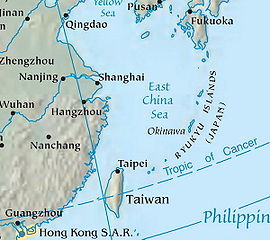
The map of Okinawa above, sourced from en.wikipedia.org


The image above of Okinawa, sourced from deshow.net


New York Times article: In Okinawa, Talk of Break From Japan Turns Serious
Ko Sasaki for The New York Times
 
Chosuke Yara, the head of the Ryukyu Independence Party, last month. “Independence is an idea whose time has come,” he said.

By Martin Fackler

Published July 5, 2013

NAHA, Japan — In a windowless room in a corner of a bustling market where stalls displayed severed pigs’ heads and bolts of kimono silk, Okinawans gathered to learn about a political idea that until recently few had dared to take seriously: declaring their island chain’s political independence from Japan.

About two dozen people of all ages listened as speakers challenged the official view of Okinawa as inherently part of homogeneous Japan, arguing instead that Okinawans are a different ethnic group whose once-independent tropical islands were forcibly seized by Japan in 1879. Then, to lighten the mood, the organizers showed “Sayonara, Japan!”, a comedy about a fictional Okinawan island that becomes its own little republic.

“Until now, you were mocked if you spoke of independence,” said one speaker, Kobun Higa, 71, a retired journalist whose book on the history of the tiny independence movement has become a hot seller online. “But independence may be the only real way to free ourselves from the American bases.”

Mr. Higa and other advocates admit that few islanders would actually seek independence for Okinawa, the southernmost Japanese island chain, which is home to 1.4 million residents and more than half of the 50,000 American troops and sailors based in Japan. But discontent with the heavy American presence and a growing perception that the central government is ignoring Okinawans’ pleas to reduce it have made an increasing number of islanders willing to at least flirt publicly with the idea of breaking apart in a way that local politicians and scholars say they have not seen in decades.

In May, a newly formed group led by Okinawan university professors held a symposium on independence that drew 250 people. A tiny political party that advocates separation from Japan through peaceful means has been revived after decades of dormancy, though its candidates have fared poorly in recent elections.

And on his blog, a member of Parliament from Okinawa recently went so far as to post an entry titled “Okinawa, It’s Finally Time for Independence From Yamato,” using the Okinawan word for the rest of Japan.

“Before, independence was just something we philosophized about over drinks,” said Masahide Ota, a former governor of Okinawa, who is not a member of the movement.

“Now, it is being taken much more seriously.”

The independence movement remains nascent, with a few hundred active adherents at most. But Mr. Ota and others say it still has the potential to complicate Japan’s unfolding contest with China for influence in the region.

That struggle expanded recently to include what appears to be a semiofficial campaign in China to question Japanese rule of Okinawa. Some analysts see the campaign as a ploy to strengthen China’s hand in a dispute over a smaller group of islands that has captured international headlines in recent months. Some Chinese scholars have called for exploiting the independence movement to say there are splits even in Japan over the legitimate ownership of islands annexed during Japan’s imperial expansion in the late 19th century, as Okinawa and the smaller island group were.

Okinawa has long looked and felt different from the rest of Japan, with the islands’ tropical climate, vibrant musical culture and lower average incomes setting it apart. Strategically situated in the center of East Asia, the islands, once known as the Kingdom of the Ryukyus, have had a tortured history with Japan since the takeover, including the forced suicides of Okinawan civilians by Japanese troops during World War II and the imposition of American bases after the war.

For years, Okinawans directed much of their ire over the bases at the United States. But that changed four years ago when the Japanese prime minister at the time, Yukio Hatoyama, reneged on campaign pledges to move the bustling Marine air base at Futenma off Okinawa, rather than to a less populated site on the island as previous governments had approved. After that, many Okinawans shifted much of their anger toward the rest of Japan, which wants the United States military presence to offset China’s growing power, but is unwilling to shoulder more of the burden of bases for fear of crime, noise and accidents.

Local leaders and scholars say the last time Okinawans spoke so openly of independence was during a period of sometimes violent unrest against American control before the United States ended its postwar occupation of the islands in 1972.

“There is a growing feeling that Okinawans just exchanged one colonial master in Washington for another one in Tokyo,” said Shinako Oyakawa, 32, a doctoral student at the University of the Ryukyus and a co-founder of Okinawan Studies 107, a group promoting research into Ryukyuan ethnic identity.

Such discontent has helped nurture groups like hers, which seek to promote the idea that the islanders form a distinct ethnic group. It has also led to the creation of places like Ryukyu Hall, a privately run school that opened last year and offers classes on Okinawan language and culture.

On a recent weekend, about 30 people gathered at the school, a small, sparsely furnished two-story building, to hear accounts in the Ryukyuan language by survivors of the American invasion of Okinawa in 1945.

“Regaining our identity is the first step toward regaining independence,” said Midori Teruya, 41, a co-founder of the school in Ginowan, the site of the Futenma air base.

The talk of independence has grown enough that it is being heard in Tokyo, where some conservative newspapers have begun calling the Okinawan independence activists “pawns” of China.

Whether or not the activists are pawns, there is certainly some discussion in China about using the independence movement. Recently, an editorial in The Global Times, a state-run Chinese newspaper, said China could pressure Japan by “fostering forces in Okinawa that seek the restoration of the independence of the Ryukyu chain.”

Few believe China is about to pursue ownership of Okinawa. But Japanese analysts see the informal campaign as the latest gambit in China’s attempts to take over the smaller group of islands, known as the Senkaku in Japan and Diaoyu in China, by essentially warning that China could expand its claims beyond those islands if Japan ignores its arguments.

“It will create problems for us if the Chinese government tries to use this issue,” said Masaki Tomochi, a professor at Okinawa International University who helped organize the symposium on independence in May.
Mr. Tomochi and other activists said that in the remote event that Okinawa became independent, they felt little fear of a Chinese takeover because the Ryukyus had held friendly ties with China for centuries before the Japanese takeover.

Mr. Tomochi’s group is planning a second symposium to present research on how Pacific island nations like Palau could serve as a model for a future Ryukyu republic. The idea is to try to overcome what he sees as the main challenge his movement faces: winning over Okinawans who seem content with their Japanese-style living standards.

“People are talking independence now, but how realistic is it?” asked Yoshinao Hiyane, 22, an economics major at Okinawa International University. “My generation has grown up Japanese.”

At the movie screening in the market, independence supporters tried to bolster the notion that their idea is more than a fantasy by handing out color-copied “currency” of a Ryukyu republic. They stood before a blue banner with three stars that the organizer, Chosuke Yara, called its flag.

“Recently, the interests of the Japanese people and the Ryukyu people have clearly diverged,” said Mr. Yara, 61, the head of the tiny Ryukyu Independence Party. “Independence is an idea whose time has come.”

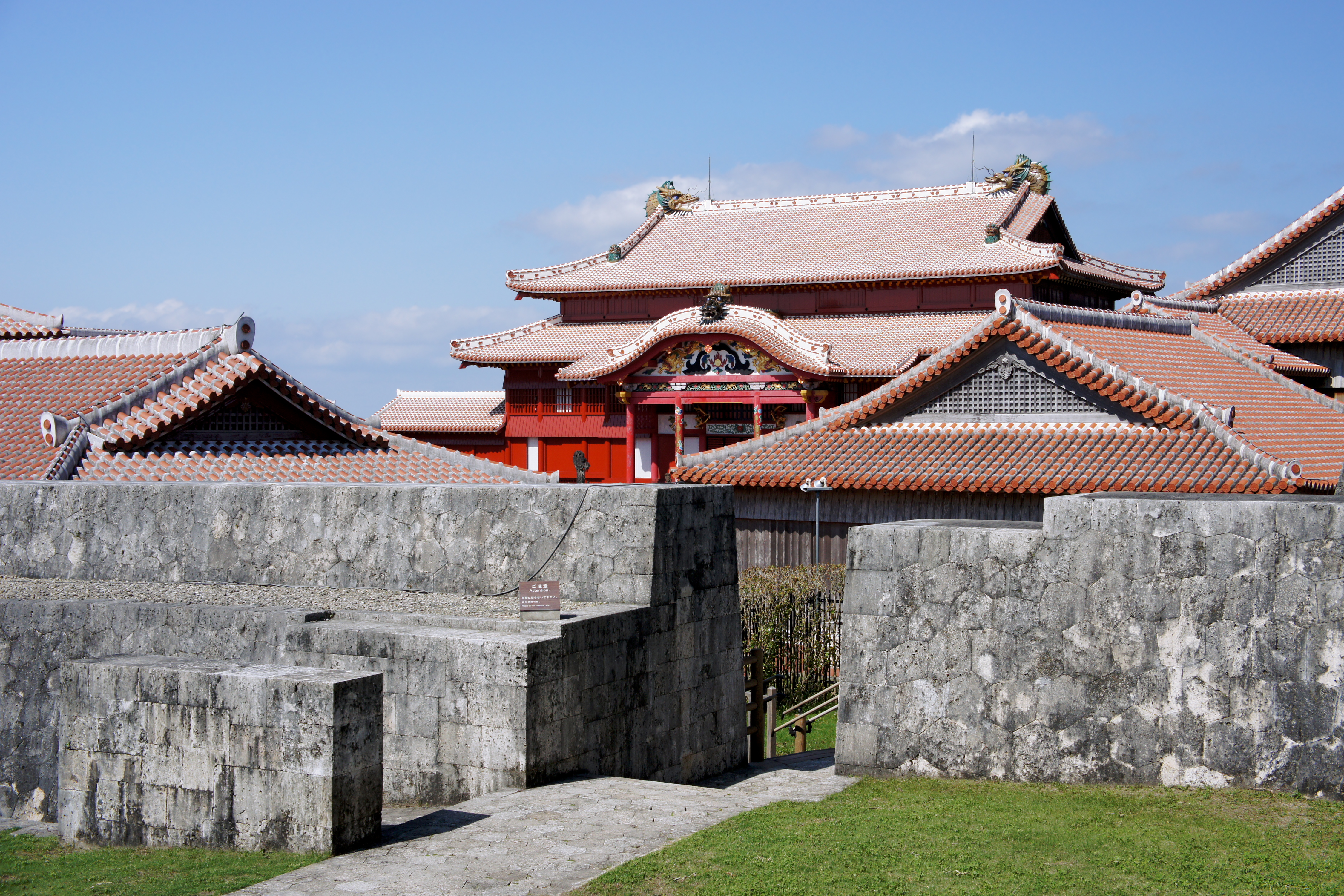
Naha Shuri Castle in Okinawa, image below sourced from en.wkipedia.org

File:Naha Shuri Castle50s3s4500.jpg

Thursday, January 24, 2013

Free scholarships available for international college students at prestigious Xiamen University in the beautiful seaside Xiamen City of Fujian province, south China. This is a great opportunity to study Mandarin and to better understand the world's fastest-growing major economy, now already the second biggest in the world. It is also an exciting chance to study the world's oldest continuous civilization with over 5,000 years of recorded history.

Xiamen University was founded and donated by the legendary Singapore tycoon Tan Kah Kee.

A reader of my Philippine Star columns, University of Asia and the Pacific, teacher Josefina Tiu, recently emailed me a brochure of Xiamen University and its scholarship programs.

Anybody interested or have friends and kins interested, please email me at willsoonflourish@gmail.com or post your contact details and email address at the comments section below this blog post. I shall immediately forward the university brochure and informations.


(Image below sourced from www6.cityu.edu.hk)


(Image below sourced from paulnoll.com)


(Image below sourced from topchinatravel.com)


Friday, January 11, 2013

Kudos to Asia! Apple, Inc. boss just said that booming China will soon surpass USA as the world's biggest market! Let us all work harder to help our entire region to benefit from unprecedented economic progress!

We are truly witnessing the rise of a new world order in the 21st century, of the resurgence of Asia again as the center of world civilization, socio-economic progress and hopefully long-term harmony as well.


Apple CEO Cook Says China Will Overtake U.S. as Biggest Market


Play
Apple CEO Cook Meets with China Mobile Chairman
 
 
Apple Inc. (AAPL) Chief Executive Officer Tim Cook said China will overtake the U.S. to become its largest market, as the iPhone-maker adds more stores and considers debuting new products in the country.


Apple CEO Cook Says China Will Overtake U.S. as Biggest Market

Apple CEO Cook Says China Will Overtake U.S. as Biggest Market

Apple CEO Cook Says China Will Overtake U.S. as Biggest Market
Tomohiro Ohsumi/Bloomberg
Pedestrians walks past an Apple Inc. store in Beijing, China. Apple intends to open “many more” outlets in China over the next several years, Cook said in the Xinhua interview. The company now has 11 stores in China and Hong Kong.
 
Pedestrians walks past an Apple Inc. store in Beijing, China. Apple intends to open “many more” outlets in China over the next several years, Cook said in the Xinhua interview. The company now has 11 stores in China and Hong Kong. Photographer: Tomohiro Ohsumi/Bloomberg

Apple’s Cook Discusses Cooperation With China Mobile Chairman

Apple’s Cook Discusses Cooperation With China Mobile Chairman

Apple’s Cook Discusses Cooperation With China Mobile Chairman
Tomohiro Ohsumi/Bloomberg
A worker walks past the Apple Inc. logo in the Sanlitun area of Beijing, China.
A worker walks past the Apple Inc. logo in the Sanlitun area of Beijing, China. Photographer: Tomohiro Ohsumi/Bloomberg


Enlarge image China Mobile chairman Xi Guohua

China Mobile chairman Xi Guohua

China Mobile chairman Xi Guohua
Jerome Favre/Bloomberg
Xi Guohua, chairman of China Mobile Ltd.
Xi Guohua, chairman of China Mobile Ltd. Photographer: Jerome Favre/Bloomberg

“I believe it will become our first,” Cook said in an interview with state-owned Xinhua News yesterday. No timeframe was given for the prediction. The Cupertino, California-based company had $5.7 billion of sales in China during the quarter ended September. U.S. revenue was about $14.4 billion, based on figures in an Oct. 25 earnings statement.

Cook also met the chairman of China Mobile Ltd. (941) while in the country, as he seeks to boost cooperation with a wireless operator that has 707 million customers and no agreement to sell iPhones. The CEO is making his second visit to the country in less than a year as Apple tries to reverse its shrinking share of the local smartphone market.

Apple intends to open “many more” outlets in China over the next several years, Cook said in the Xinhua interview. The company now has 11 stores in China and Hong Kong.

Cook also said he would also “love” to introduce new products in China first, according to the report. The iPhone 5 was released in China in December, almost three months after the U.S. introduction.

China Growth

The company’s growth in the world’s most populous nation has been limited by it only working with smaller carriers and competition from domestic phone-makers. Its share of the nation’s smartphone market slipped to sixth from fourth in the third quarter, according to researcher IDC.

Yesterday, Cook met with Xi Guohua, the chairman on China Mobile at the carrier’s headquarters in Beijing. The two discussed “cooperation,” according to a statement from China Mobile, the world’s largest wireless operator by subscribers. It didn’t elaborate.

China Mobile, which accounts for 64 percent of the nation’s mobile users, said last month that it needs to reach agreements on benefit-sharing with Apple before it can begin offering iPhones. The operator also has a homegrown third-generation network that isn’t used by other carriers.

Apple distributes iPhone with the nation’s second- and third-largest carriers: China Unicom (Hong Kong) Ltd. (762) and China Telecom Corp. (728)

Wednesday, December 5, 2012

USA and China can be strategic & capitalist partners, according to a British columnist of Bloomberg who was educated at Oxford and the London School of Economics


My Comments:


It is interesting how the decline of a superpower and the emergence of a new superpower (actually resurgence or revival of its ancient superpower status) often sparks off headline-grabbing arguments and conflicts, but I agree with British columnist Clive Crook that America and China are actually similar in capitalistic economic ethos and have so much interlinked strategic interests.


This British analyst is also correct in reminding America that his own home country, Britain, was once also the biggest world superpower which had difficulty adjusting and coming to terms with its declining status vis-a-vis the then rising new superpower USA over a century ago.


I'm sharing below this wise and optimistic column by Clive Crook, which essentially also points to the reality that our world can and should be a win-win place, no need to be a zero-sum game scenario. Let us build a more progressive, positive, harmonious and dynamic world!


It is good to witness the rise of the 21st century world which seems to be becoming multi-polar, diverse, and with no longer any one superpower dominating or bossing the rest of the world, but a brave new world where all nations big or small shall be equal and respected.


(Image below sourced from studentsforlife.org)


Read this column below and share your comments at the end of this blog post?


Note: Clive Crook was born in Yorkshire, educated at Bolton School; Magdalen College, Oxford (where he was a foundation scholar); and the London School of Economics.

After leaving university he was an official in H.M. Treasury and the Government Economic Service. Crook worked for 20 years at 'The Economist,' variously serving as economics correspondent, Washington correspondent, economics editor and deputy editor. In addition to writing for Bloomberg View, Crook is a senior editor of 'The Atlantic' and a contributing editor of 'National Journal.'


China and the U.S.

Illustration by Niv Bavarsky

Why China and the U.S. Can Be Capitalist Comrades


China's growth has slowed a bit this year, but the surge in vivid predictions about the country’s future continues to amaze observers. This observer, at any rate.

Experts foresee imminent financial collapse or an uninterrupted rise to economic preeminence. The ruling Communist Party will either loosen or tighten its grip. The consequences for the U.S. and the rest of the world will be either benign or disastrous.
Clive Crook


Clive Crook is a Bloomberg View columnist and member of the Bloomberg View editorial board.
Perhaps bewildered by my first visit to Beijing and Shanghai in more than 10 years, not to mention the jet lag, I find these contending inevitabilities unconvincing. Little in life is certain, and that probably goes double for China.

Nobody could have predicted the country’s economic performance since Deng Xiaoping began his economic reforms in 1979: 30 years of growth at 10 percent a year. In the past 10 years alone, gross domestic product per person has increased two-and-a-half times, in inflation-adjusted terms. Consumption has grown more slowly than output, admittedly, because investment has increased its share of the total, but still. It’s astonishing, and it most likely understates the pace of economic progress in places like Beijing and Shanghai.

Knowing the numbers and understanding that these new world cities aren’t representative of the whole country doesn’t prepare you for their vibrancy and prosperity. And what I recalled from my previous visits didn’t prepare me for the eagerness to engage and the openness of the businesspeople and scholars I’ve been meeting.


(Image below from forbes.com)


Optimistic Outlook

The same questions preoccupy Chinese and American thinkers alike: How long, if at all, can growth at anything like this rate continue, and, if it does, will it drive China and the U.S. toward confrontation? With all due timidity, and despite some dangers in the economic outlook, I lean to optimism on the economic question. I will go into the reasons next week. On the geopolitics, for reasons I will go into now, I lean to optimism as well.

In judging the likelihood that China and the U.S. will come to blows, it’s important to remember that they now share a common religion: capitalism.

A great deal is made of the supposedly fundamental differences between China’s economic model and the one that prevails in the West. It flatters everybody to think in these terms. You can’t have the superior model if everybody’s model is essentially the same.

China talks about “socialism with Chinese characteristics,” Western analysts about “state capitalism.” Market-based economies do come in different versions, of course. American capitalism is different from French capitalism, which is different from South Korean capitalism, which is different from Singaporean capitalism, the version that first impressed Deng. But they are family. China is another sibling. You just have to discount the age difference.

Various branches of government still play a big role in the Chinese economy, to be sure. State-owned enterprises still account for between 25 and 30 percent of industrial output, down from more than 80 percent in the late 1970s. Some of these SOEs are huge and celebrated as national champions, an idea not unheard of in Europe. But they continue to dwindle in aggregate, and they are increasingly exposed in varying degrees to market forces.

This isn’t a blend of socialism and communism kitted out with optional extras. It isn’t market-Leninism. Thirty years on, China is a capitalist country.

Therefore, the contest between China and the U.S., if it happens, won’t be about which of two bitterly opposed ideologies survives. Both might wish to deny it, but they find themselves on the same side in that particular struggle.

(Image below sourced from washingtonpost.com, it shows USA President Barack Obama with outgoing China President Hu Jintao)


Greater Transparency

In the political as opposed to economic realm, of course, that isn’t true. Chinese politics is no longer totalitarian, but it’s authoritarian. Dissent of certain kinds is repressed, though critics who respect the bounds get a hearing. The Chinese want greater transparency, accountability and a crackdown on corruption, but they aren’t clamoring for the vote. America’s contempt for this system, and China’s resentment of U.S. contempt, give them something to fight over if they choose to.

In matters of war and peace, interests usually matter more than values. China is acutely sensitive to the risks posed by its extended land borders. It sees its modern history, with good reason, as a series of depredations by hostile neighbors. As it gets richer it will do what most rising powers have done -- attend to its security by increasing its military capabilities. The U.S. understands this and sees its own interests at risk.

It’s already happening. China’s gathering strength and recent new assertiveness in foreign policy are stirring concern in the region and beyond. When the Obama administration announced its “pivot to Asia,” it was affirming its commitment to the prevailing regional order, the rise of China notwithstanding.

The danger is plain, especially because the U.S. has sensitivities of its own. Even as its economy resumes a healthy rate of expansion, America will have to cope with relative decline. The U.S. will grow, but China will grow faster. By mere weight of population its economy will soon be bigger -- and eventually, much bigger. Nothing in America’s history has prepared it for this. Take it from a Brit: It may take some getting used to.

Yet the great capitalist convergence, if it continues, will in crucial respects push the other way and promote peace. Cross- border capitalism -- globalization, if you prefer -- creates mutual dependence. Countries bound together by flows of goods, services, capital and people, as China and the U.S. increasingly are, gradually come to see that they succeed or fail together.

The dangerous fallacy that trade is a zero-sum game is tenacious, but as economic interdependence increases, the mutual benefits become more obvious. Also, with rising prosperity, people have more to lose. Fear of conflict -- not war by remote- control, but one that would put everything at risk -- will surely rise.

Interaction at every level should be the order of the day. Familiarity will breed friendship, I’m convinced, as Chinese and U.S. attitudes are often comically similar. Prickliness over sovereignty and an exaggerated belief in national exceptionalism are the most salient examples. Neither country willingly cedes control to outsiders. Neither can abide being bossed around. Both are entirely convinced of the rightness of their ideas.

If America wants to understand China, it could start by better understanding itself -- and vice versa. Then, if China can moderate its sense of grievance over past injuries, and the U.S. can curb its desire to tell everybody else how to live, a genuine partnership between the two superpowers is achievable.

(Clive Crook is a Bloomberg View columnist. The opinions expressed are his own.)


(Image below of China's next leader Xi Jinping and USA Vice-President Joe Biden, souced from wreporter.com)


Wednesday, November 21, 2012

Balanced & independent foreign policy possible for the Philippines?


When can the Philippines have a truly independent foreign policy, neither pro-USA or pro-China, but first and foremost pro-Philippines in strategic priorities, orientation and mindset?


I wish to share a recent opinion column by the outstanding newspaper columnist Conrado de Quiros:


There's the Rub column

Very foreign policy

By Conrado de Quiros

Philippine Daily Inquirer


A couple of things are happening in our part of the world that say much about us. One is Barack Obama’s visit to Burma (Myanmar) and the other is our breaking up with Asean and going it alone in our approach to China.


First, Obama’s visit to Burma or, more to the point, his nonvisit to the Philippines: Several observers have made this out as a snub to us. The reasoning goes: Obama is hopping from Thailand to Burma to Cambodia, the last where a regional summit is taking place. Surely, he can drop by Manila, if only for a day, just to say hello to an old and loyal friend? It costs so little and pays so much. That he’s not doing it can only mean a snub.

Well, if it’s a snub, it’s not undeserved. The Fil-Ams were the odd man out among the immigrants in the United States, going for Mitt Romney over Obama, and not without racial, or indeed racist, overtones.
What has he got to be grateful to Filipinos for?

But that’s presuming that’s how their thinking goes. Which only shows how our thinking goes. Taking things personally, particularly in foreign policy, is in fact not an American pastime, it is a Filipino one.

The specific principle, or cultural value, that underpins our foreign policy is “may pinagsamahan” and its corollary, “walang iwanan.” To begin with, our foreign policy rests only on our relationship with one country, the United States. Everything pivots around it. The principle of may pinagsamahan says we’ve gone through a great deal with America, we’ll remain together through thick and thin. And the principle of walang iwanan says we won’t abandon America and America won’t abandon us—mutual defense or magkasangga all the way.


Of course the sentiment did not just arise spontaneously in our minds, though it has taken on a self-perpetuating ferocity there; it was cultivated. Not least by the mythology of “I shall return,” which resonates with walang iwanan. And not least, too, by the mythology of Bataan and Corregidor, with its images of Filipinos and Americans fighting side by side to the last man, even though most of the Americans made off in ships in the night with Manuel Quezon and Sergio Osmeña in tow, and the Filipinos ended up making the Long March.

Unfortunately for us, the sentiment is completely one-way. As seen in the cruel fate our veterans have suffered in the hands of their presumed comrades. Obama’s nonvisit to the Philippines is by no means surprising. At the very least, why should he bother with a people that can be counted upon to be there all the time, however shabbily they are treated, they may sulk for a while or indulge in tampo, but they’ll get over it fast? At the very most, why should he bother with a country that doesn’t really matter in Asian affairs, the current focus of America’s attention, which matters only as a repository, or suppository, of US bases in their various guises?

Which brings me to P-Noy’s disagreement with Asean.


On the face of it, it seems a very principled stand in the face of provocation by Cambodia. P-Noy took issue with Cambodian Prime Minister Hun Sen when Sen announced that Asean had agreed not to “internationalize” its territorial disputes with China and would instead confine negotiations between the bloc and China. No such agreement had been reached, P-Noy expostulated, and he himself would continue to speak out on a global stage on it. “The Asean route is not the only route for us,” he declared.

That is all very well, but what exactly do we mean when we say we will continue to internationalize the dispute and speak on a global stage? If we mean that we will bring it to the attention of the United Nations and to the international adjudication bodies, then we are well within our rights. If we mean that we are going to make our beef known to, and appeal to the sense of justice of, the countries in wider Asia, Europe, and the other continents, then we are well within our senses. If we mean that we will continue to try to conscript America into our cause, specifically by getting it to speak loudly and unequivocally on our behalf, then we are well on our way to perdition.

The last in fact was what Sen was referring to when he said Asean had agreed not to internationalize the territorial dispute. It was a reference to our attempts to drag the United States into the fray. Inside looking out, or from our perspective, it’s Cambodia that looks like the odd man out, showing exceptionally slavish devotion and submission to its master, China. Outside looking in, or from the perspective of our Southeast Asian neighbors, it’s we who look like the bearded fool of the world, showing exceptionally embarrassing devotion and submission to our not-so-former colonial master, America.

(Cambodian leader Hun Sen)


(The logo of ASEAN)


(Flag of China at a parade in Beijing)


What route apart from the Asean, the one group that speaks for our immediate neighborhood, the one organization that binds our part of the world, the one bloc several of whose members have a territorial dispute with China, do we have? Surely we can continue to press our viewpoint within Asean? Surely we can try to get the rest of Asean on our side? Surely we can stand in solidarity with Asean and present a united front against China?

I don’t know how effective that would be. I don’t know how far it will dissuade China from its territorial ambitions. But I do know it is better than magsumbong kay Sam, which will produce nothing and only cost us more—not least in territory for US servicemen to run around. I do know it will dissuade our neighbors from continuing to think of us as a nation that never gained independence, that remains wrapped and trapped in the mental cocoon of being “sandal sa pader.” I do know it will help to get our neighbors to treat us a little more seriously.

I do know it will help to make our foreign policy less foreign—to us.

Saturday, November 17, 2012

British author Dr. Martin Jacques lecture on Nov. 19 (Monday) at 1 pm at the Intercontinental Hotel Manila in Ayala Avenue, Makati City, Metro Manila, The Philippines. Topic: The Rise of China as Superpower and how the World should adjust to this phenomenon (Note: Please read Philippine Star columnist Billy Esposo's piece on Dr. Martin Jacques below after this news)

The Philippine Star newspaper is one of the sponsors of this lecture, so it must be good! Join & tell others.


            British economist, Cambridge University graduate and scholar Dr. Martin Jacques, author of the global bestselling book “When China Rules the World”.

Dr, Martin Jacques is a columnist for Britain’s The Times, The Sunday Times, The Guardian and New Statesman. He is visiting fellow at London School of Economics Asia Research Center, visiting professopr at Japan’s Aichi University, at China’s Renmin University and a visiting fellow at the Asia Research Institute of the National University of Singapore (NUS).


Martin Jacques will deliver a lecture with the same title and on how the rest of the world should adjust to this new phenomenon of a rising China. His lecture will be on November 19, Monday, starting at 1 pm at the Hotel Intercontinental in Ayala Avenue, Makati City.

Among the reactors in the lecture will be Filipino experts on China like the Emmy award-winning journalist Chito Santa Romana.

The Philippine Star is one of the sponsors of this lecture.

National Bookstore and Powerbooks will also sell Dr. Martin Jacques’ bestselling book, and there shall be an autograph-signing session at Hotel Intercontinental on November 19.

For inquiries about the lecture, text or call 09175373051.  


Below is a column by Billy Esposo of the Philippine Star about this British author and scholar:

China to overtake the US sooner than you think

AS I WRECK THIS CHAIR, By William M. Esposo
 
Martin Jacques, the author of the book “When China Rules the World”  is also an economist and columnist of the Guardian and New Statesman.

He recently spoke before a TED Salon in London (link: http://www.ted.com/talks/martin_jacques_understanding_the_rise_of_china.html  about how China  is going to overtake the US sooner than most people think.

What Martin Jacques had outlined in his lecture is of great importance to us Filipinos who are caught in the big geopolitical power game between the US and China. Per Acting Foreign Affairs Secretary, Albert del Rosario, we will continue our “sole strategic partnership” with the US.

Jacques narrated that even before the Western Financial Crisis Goldman Sachs had already projected that the Chinese economy will soon surpass that of the US and that in 2050 the Chinese economy will be double the size of that of the US.

Citing BNP Paribas projections, Jacques stated that the post-crisis date when China overtakes the US is now 2020. “China is going to change the world in two fundamental respects. First of all, it’s a huge developing country with a population of 1.3 billion people, which has been growing for over 30 years at around 10 percent a year,” Jacques said. He added: “Never before in the modern era has the largest economy in the world been that of a developing country, rather than a developed country. Secondly, for the first time in the modern era, the dominant country in the world — which I think is what China will become — will be not from the West and from very, very different civilizational roots.”

Jacques cited the “widespread assumption in the West that, as countries modernize, they also Westernize.” He said: “This is an illusion. It’s an assumption that modernity is a product simply of competition, markets and technology. It is not; it is also shaped equally by history and culture. China is not like the West, and it will not become like the West.”

To understand China, Jacques suggests that we should not apply conventional approaches and Western yardsticks. He offered three building blocks for understanding China.

Civilization and not nation State

Jacques asserted that China is not really a nation State. Jacques said: “what gives China its sense of being China, what gives the Chinese the sense of what it is to be Chinese, comes not from the last hundred years, not from the nation state period, which is what happened in the West, but from the period, if you like, of the civilization State.”

He amplified: “I’m thinking here, for example, of customs like ancestral worship, of a very distinctive notion of the State, likewise, a very distinctive notion of the family, social relationships like guanxi, Confucian values and so on. These are all things that come from the period of the civilization State. In other words, China, unlike the Western states and most countries in the world, is shaped by its sense of civilization, its existence as a civilization State, rather than as a nation State.”

Jacques cited two profound implications of being a civilization State, rather than a nation State, as follows: “The first is that the most important political value for the Chinese is unity,” the maintenance of Chinese civilization. He recalled how Europe had fragmented after the collapse of the Holy Roman Empire and had remained divided ever since. “China, over the same time period, went in exactly the opposite direction, very painfully holding this huge civilization State together,” He added.

The second implication that Jacques cited was that China will naturally evolve into a single civilization with many systems, with Hong Kong as a good example.

Different conception of race

For his second building block, Jacques said: “The Chinese have a very, very different conception of race to most other countries. Do you know, of the 1.3 billion Chinese, over 90 percent of them think they belong to the same race, the Han. Now this is completely different from the other world’s most populous countries. India, the United States, Indonesia, Brazil — all of them are multiracial. The Chinese don’t feel like that. China is only multiracial really at the margins.” He added: “A history of at least 2,000 years, a history of conquest, occupation, absorption, assimilation and so on, led to the process by which, over time, this notion of the Han emerged — of course, nurtured by a growing and very powerful sense of cultural identity.

Jacques cited a down side of this conception of race — “They really believe in their own superiority, and they are disrespectful of those who are not.” He mentioned the Chinese treatment of the Uyghurs and the Tibetans.
The State is a patriarch

Jacques cited the Chinese State as his third building block — highlighting how State and society are viewed differently in China compared to the West. He said: “Now we in the West overwhelmingly seem to think — in these days at least — that the authority and legitimacy of the state is a function of democracy. The problem with this proposition is that the Chinese State enjoys more legitimacy and more authority amongst the Chinese than is true with any Western State.”

Per Jacques, the State in China “enjoys a very special significance as the representative, the embodiment and the guardian of Chinese civilization, of the civilization State. This is as close as China gets to a kind of spiritual role.” He added: “for 1,000 years, the power of the Chinese State has not been challenged. It’s had no serious rivals.” Jacques noted that the Chinese views the State as “the head of the family, the patriarch of the family.”

Cautioning the West about their arrogance and ignorance, Jacques explained that East Asia is where a third of the world’s population lives and it is the largest economic region in the world. He added that: “people from East Asia, are far more knowledgeable about the West than the West is about East Asia.

Jacques added: “What is happening is that, very rapidly in historical terms, the world is being driven and shaped, not by the old developed countries, but by the developing world. We’ve seen this in terms of the G20 — usurping very rapidly the position of the G7, or the G8.”

He warns of two consequences. The first is that the West is rapidly losing its influence in the world. The second is “that the world will inevitably, as a consequence, become increasingly unfamiliar to us, because it’ll be shaped by cultures and experiences and histories that we are not really familiar with, or conversant with.”

“For 200 years, the world was essentially governed by a fragment of the human population. That’s what Europe and North America represented. The arrival of countries like China and India — between them 38 percent of the world’s population — and others like Indonesia and Brazil and so on, represent the most important single act of democratization in the last 200 years. Civilizations and cultures, which had been ignored, which had no voice, which were not listened to, which were not known about, will have a different sort of representation in this world. As humanists, we must welcome, surely, this transformation. And we will have to learn about these civilizations,” Jacques said.

We are indeed entering the China century. The big question that must be posed is this — why is our foreign policy still glued to a sole strategic partnership with the US?
*      *      *

Tuesday, November 13, 2012

What is the real truth about China & Japan dispute on Diaoyu or Senkaku Isles?

My Comments:

I have been asked regarding the controversy over the Diaoyu or Senkaku isles which have caused renewed conflicts between China, Taiwan on one side and Japan on the orther side.

I came across informations from the blog of Harvard and Oxford alumnus, two-time Pulitzer Prize-winning New York Times columnist Nicholas D. Kristof, and would like to share with you.

Nicholas Kristof laments the position of his country USA for apparently siding with Japan, when he said the preponderance of evidences point to China being correct in its sovereignty claim over the Diaoyu Islands.

Hopefully, both Asian countries can come to a peaceful settlement of this historic problem as soon as possible based on the historical truth, fairness and justice.


Here is the September 19, 2012 article by Nicholas Kristof and scholar Han-Yi Shaw :


The Inconvenient Truth Behind the Diaoyu/Senkaku Islands


Diaoyu Island is recorded under Kavalan, Taiwan in Revised Gazetteer of Fujian Province (1871).
Han-yi ShawDiaoyu Island is recorded under Kavalan, Taiwan in Revised Gazetteer of Fujian Province (1871).
I’ve had a longstanding interest in the Diaoyu/Senkaku islands, the subject of a dangerous territorial dispute  between Japan and China. The United States claims to be neutral but in effect is siding with Japan, and we could be drawn in if a war ever arose.

Let me clear that I deplore the violence in the recent anti-Japan protests in China:  the violence is reprehensible and makes China look like an irrational bully. China’s government should rein in this volatile nationalism rather than feed it. This is a dispute that both sides should refer to the International Court of Justice, rather than allow to boil over in the streets. That said, when I look at the underlying question of who has the best claim, I’m sympathetic to China’s position.

I don’t think it is 100 percent clear, partly because China seemed to acquiesce to Japanese sovereignty between 1945 and 1970, but on balance I find the evidence for Chinese sovereignty quite compelling.

The most interesting evidence is emerging from old Japanese government documents and suggests that Japan in effect stole the islands from China in 1895 as booty of war.

This article by Han-Yi Shaw, a scholar from Taiwan, explores those documents. I invite any Japanese scholars to make the contrary legal case. – Nicholas Kristof

Japan’s recent purchase of the Diaoyu/Senkaku Islands has predictably reignited tensions amongst China, Japan, and Taiwan. Three months ago, when Niwa Uichiro, the Japanese ambassador to China, warned that Japan's purchase of the islands could spark an "extremely grave crisis" between China and Japan, Tokyo Governor Ishihara Shintaro slammed Niwa as an unqualified ambassador, who “needs to learn more about the history of his own country”.

Ambassador Niwa was forced to apologize for his remarks and was recently replaced. But what is most alarming amid these developments is that despite Japan’s democratic and pluralist society, rising nationalist sentiments are sidelining moderate views and preventing rational dialogue.

The Japanese government maintains that the Diaoyu/Senkaku Islands are Japanese territory under international law and historical point of view and has repeatedly insisted that no dispute exists. Despite that the rest of the world sees a major dispute, the Japanese government continues to evade important historical facts behind its unlawful incorporation of the islands in 1895.

Specifically, the Japanese government asserts, “From 1885 on, our government conducted on-site surveys time and again, which confirmed that the islands were uninhabited and there were no signs of control by the Qing Empire.”

My research of over 40 official Meiji period documents unearthed from the Japanese National Archives, Diplomatic Records Office, and National Institute for Defense Studies Library clearly demonstrates that the Meiji government acknowledged Chinese ownership of the islands back in 1885.

Following the first on-site survey, in 1885, the Japanese foreign minister wrote, “Chinese newspapers have been reporting rumors of our intention of occupying islands belonging to China located next to Taiwan.… At this time, if we were to publicly place national markers, this must necessarily invite China’s suspicion.…”

In November 1885, the Okinawa governor confirmed “since this matter is not unrelated to China, if problems do arise I would be in grave repentance for my responsibility”.

“Surveys of the islands are incomplete” wrote the new Okinawa governor in January of 1892. He requested that a naval ship Kaimon be sent to survey the islands, but ultimately a combination of miscommunication and bad weather made it impossible for the survey to take place.
Letter dated May 12, 1894 affirming that the Meiji government did not repeatedly investigate the disputed islands.
Japan Diplomatic Records Office.Letter dated May 12, 1894 affirming that the Meiji government did not repeatedly investigate the disputed islands.
“Ever since the islands were investigated by Okinawa police agencies back in 1885, there have been no subsequent field surveys conducted,” the Okinawa governor wrote in 1894.

After a number of Chinese defeats in the Sino-Japanese War, a report from Japan’s Home Ministry said “this matter involved negotiations with China… but the situation today is greatly different from back then.”

The Meiji government, following a cabinet decision in early 1895, promptly incorporated the islands.
Negotiations with China never took place and this decision was passed during the Sino-Japanese War. It was never made public.

In his biography Koga Tatsushiro, the first Japanese citizen to lease the islands from the Meiji government, attributed Japan’s possession of the islands to “the gallant military victory of our Imperial forces.”

Collectively, these official documents leave no doubt that the Meiji government did not base its occupation of the islands following “on-site surveys time and again,” but instead annexed them as booty of war. This is the inconvenient truth that the Japanese government has conveniently evaded.

Japan asserts that neither Beijing nor Taipei objected to U.S. administration after WWII. That’s true, but what Japan does not mention is that neither Beijing nor Taipei were invited as signatories of the San Francisco Peace Treaty in 1951, from which the U.S. derived administrative rights.

When Japan annexed the Diaoyu/Senkaku Islands in 1895, it detached them from Taiwan and placed them under Okinawa Prefecture. Moreover, the Japanese name “Senkaku Islands” itself was first introduced in 1900 by academic Kuroiwa Hisashi and adopted by the Japanese government thereafter. Half a century later when Japan returned Taiwan to China, both sides adopted the 1945 administrative arrangement of Taiwan, with the Chinese unaware that the uninhabited “Senkaku Islands” were in fact the former Diaoyu Islands. This explains the belated protest from Taipei and Beijing over U.S. administration of the islands after the war.
Report dated August 12, 1892 from navy commander affirming the islands were not fully investigated. Source:  Library of The National Institute for Defense Studies.
The Japanese government frequently cites two documents as evidence that China did not consider the islands to be Chinese. The first is an official letter from a Chinese consul in Nagasaki dated May 20, 1920 that listed the islands as Japanese territory.

Neither Beijing nor Taipei dispute that the Diaoyu/Senkaku Islands — along with the entire island of Taiwan — were formally under Japanese occupation at the time. However, per post-WW II arrangements, Japan was required to surrender territories obtained from aggression and revert them to their pre-1895 legal status.

The second piece evidence is a Chinese map from 1958 that excludes the Senkaku Islands from Chinese territory. But the Japanese government’s partial unveiling leaves out important information from the map’s colophon: “certain national boundaries are based on maps compiled prior to the Second Sino-Japanese War(1937-1945).”

Qing period (1644-1911) records substantiate Chinese ownership of the Diaoyu/Senkaku Islands prior to 1895. Envoy documents indicate that the islands reside inside the “border that separates Chinese and foreign lands.” And according to Taiwan gazetteers, “Diaoyu Island accommodates ten or more large ships” under the jurisdiction of Kavalan, Taiwan.

The right to know is the bedrock of every democracy. The Japanese public deserves to know the other side of the story. It is the politicians who flame public sentiments under the name of national interests who pose the greatest risk, not the islands themselves.

Update: The author would like to include an updated image of the Qing era documents that recorded, “Diaoyutai Island accommodates ten or more large ships”, as mentioned in his blog post.
Record of Missions to Taiwan Waters (1722), Gazetteer of Kavalan County (1852), and Pictorial Treatise of Taiwan Proper (1872).National Palace Museum, Taipei, Taiwan.Record of Missions to Taiwan Waters (1722), Gazetteer of Kavalan County (1852), and Pictorial Treatise of Taiwan Proper (1872).
Han-Yi Shaw is a Research Fellow at the Research Center for International Legal Studies, National Chengchi University, in Taipei, Taiwan.